 BHARCS
← The Library
BHARCS
← The Library
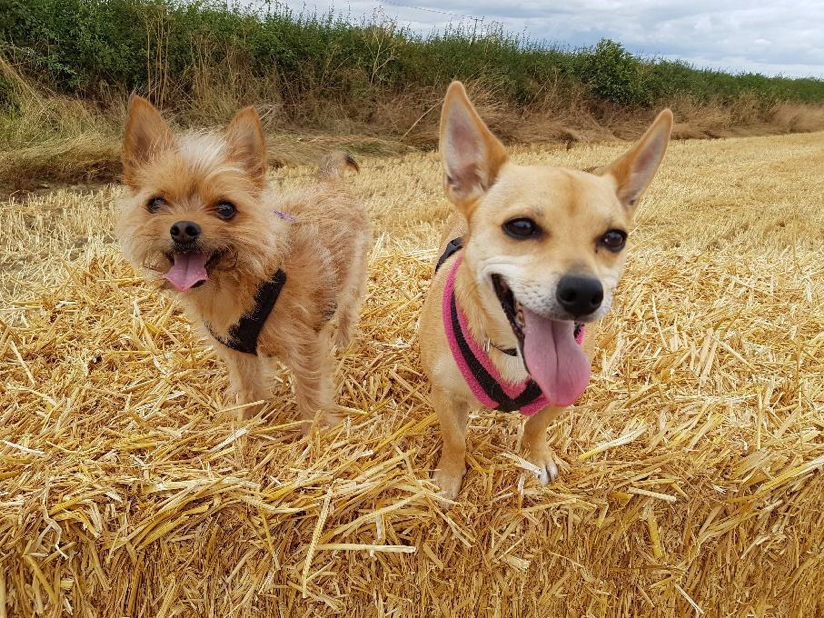 | In this guest blog, Jen Leslie writes about her pilot study on the impact of over exercising on dogs. While the sample is small, the early results are powerful and warrant a closer look. |
I have found in my experience of working with dogs and their caregivers in a home environment, unwanted behaviours expressed as a concern are often caused by a lack of an important life skill within the dog, rather than a lack of obedience or training. A highly trained dog can and often does still struggle with stress behaviours such as inability to settle, reactivity, destruction, hyperactivity and excessive vocalisation.
In this study I sought to show that too much physical activity in a day can exacerbate problem behaviours caregivers often seek professional advice for. Oftentimes a vicious circle is created where a stressed dog who cannot relax is exercised until they are physically exhausted, creating a fitter and fitter dog who needs more to fulfil these physical requirements. This creates more and more room for unwanted behaviours to present itself, bred from the stress of increasing amounts of exercise.
…In this study I show that too much physical activity in a day can exacerbate problem behaviours…
My understanding of a rest day is one where sleep and mental enrichment is favoured over physical exercise. Where vigorous physical exercise on a daily basis can lead to a build up of stress hormones in a dogs system, rest and mental enrichment tailored to the unique dog can discharge those stress hormones- thereby alleviating the stress behaviours observed within the dog. With the importance of mental stimulation becoming more and more well known amongst dog owners it can be emphasised how this is an enjoyable necessity also that owners can provide their dogs.
As humans we control so much of our dogs’ day from eating, walking, drinking, sleeping and activity. We only need to look at studies of street dogs (e.g. Pangal 2017) to allow the dog species themselves to answer the question of what they would choose to do in a day, if they could. Pangal reported that dogs, if given the choice, are not very active choosing to either sleep or engage in slow paced walking for the most part. This suggests a calmer more sedentary lifestyle may actually be preferred by our pet dogs also – not the highly arousing schedules our dogs can sometimes face.
…We only need to look at studies of street dogs which suggest a calmer more sedentary lifestyle may actually be preferred by our pet dogs also – not the highly arousing schedules our dogs can sometimes face…
Whilst an earlier study looked into the positive influence of rest days on dogs with reactivity difficulties (Cooper, n.d.), my observational study was on 5-year-old terrier cross, Raggy, who has no current fear or frustration based behavioural problems. The dog was observed within his home environment and notes taken about his body language every day for 12 days. During week one he was observed under his usual routine of three days of physical rest (but mental stimulation options available to him) and three days of going on a walk. During week two he was walked every day for at least 45 minutes once a day, with other physical activities on top of those. The behaviours observed were categorized into* :
- Attention seeking behaviours
- Reactivity to noise
- Stress behaviours
- Restlessness
- Following Behaviour
There were observable differences in the terriers behaviour during rest days and walk days in week one. On the three days he was significantly physically active he showed attention seeking behaviours and restlessness every day. He didn’t show these behaviours at all on his rest days. He also exhibited one specific behaviour on a walk day: repetitive paw licking. During week one, regardless of it being a walk day or a rest day the terrier didn’t exhibit any following behaviours.
…On active days he showed attention seeking behaviours and restlessness every day. He didn’t show these behaviours at all on his rest days…
During week two attention seeking behaviours increased 100% from week one, noise reactivity increased by 400%, restlessness increased by 66%, stress behaviours increased by 100% and following behaviours increased by 400%.
Attention seeking behaviours: 100% ↑
Noise reactivity : 400% ↑
Restlessness : 66% ↑
Stress behaviours : 100% ↑
Following behaviours : 400% ↑
Not only did the “quantity” of these behaviours increase, but so did the “quality”. During week two the terrier started growling and barking at noises he does not usually, such as people walking by the window. The attention seeking behaviours during week two became louder and more demanding: he would exhibit barking, whining and growling, rather than silent staring or paw waving. The attention seeking behaviours in week two were also longer and more persistent.
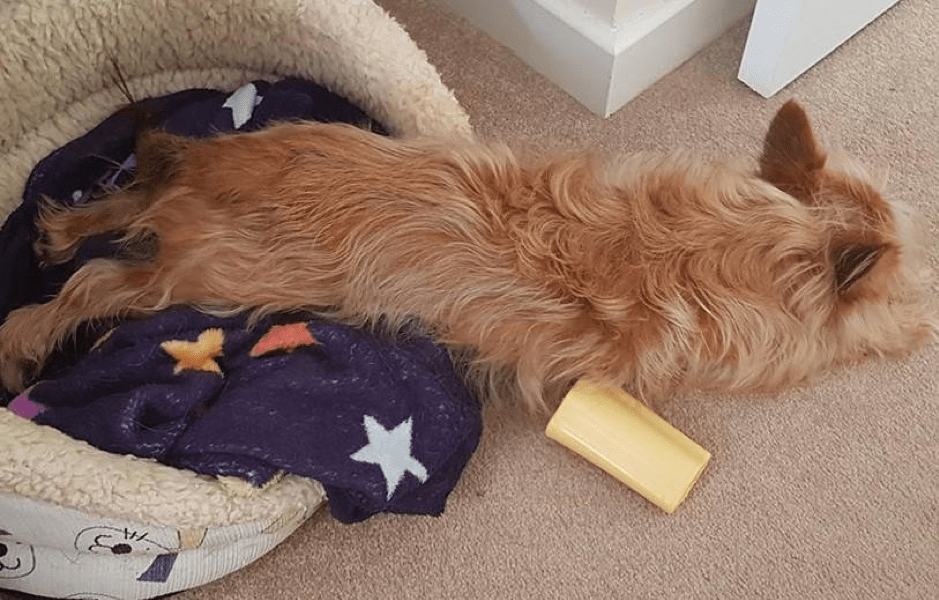
Furthermore, the dogs’ choice of resting spot and quality of rest was different in week two compared to week one. In week two he spent more time downstairs observing the rest of the family, on his feet, pacing and switching between resting places in between attention seeking behaviours. During rest days in week one he would be observed resting upstairs, away from other distractions, unmoving from his choice of resting spot – showing that he was finding value in just resting.
It was during week one that the terrier was observed to be excessively licking the top of his paw repetitively, after a particularly stimulating walk day. However, during the last two days of week two the terriers stress behaviours became worrying. He was air-licking (repeatedly protruding his tongue and dipping his head) for a significant portion of the time he was observed. The only other time this dog had been observed to show this behaviour was when the family was moving house and there was significant anxiety/stress ongoing.
During day 3 to 6 of week two there was another development: excessive following of the owner around the house. Whilst following the caregiver around, the dog was clearly showing he was unable to rest with movement going on around him, creating a “velcro” dog.
This study suggests that certain “unwanted behaviours” that dog owners seek help for; in particular those unrelated to obedience such as restlessness, attention seeking behaviours, noise reactivity, following behaviours and stress behaviours can be due to over-stimulation and lack of rest. Perhaps being a responsible dog owner is less about walking the dog every day without fail, and more about looking at how to organise the dogs’ routine to incorporate all his/her needs including mental stimulation and rest, to optimise behavioural and emotional health.
This study suggests that certain “unwanted behaviours” such as restlessness, attention seeking behaviours, noise reactivity, following behaviours and stress behaviours can be due to over-stimulation and lack of rest.
Mental stimulation activates the problem-solving part of a dogs brain and releases oxytocin- helping a dog to feel calm, relaxed and content. A variety of mental stimulation activities can encourage a dog to develop the life skill of finding calm and relaxation alone, as well as building a dogs confidence and level of independence. These are two vital life skills of a healthy family dog. What I have seen in my practice time again is that mental stimulation activities on rest days can also improve the dog-owner relationship by giving the dog-human duo something fun to engage in together. A happy strong connection between dog and owner is the breeding ground for a fantastic life shared – which is ultimately what we have brought dogs into our home for.
We must of course always appreciate that every single dog is unique and their individual physical and mental exercise needs are similarly unique. Professionals and caregivers are encouraged to come up with a routine that is best for the single dog before them, manipulating the plan through observing the dogs general behaviours and stress responses.
As for Raggy, he is back to having 2-3 rest days per week and is no longer exhibiting the unwanted/worrying behaviours expressed above!
* Behaviour list and categorization:
Attention seeking behaviours | Staring whilst wagging tail at person Waving paw at person Whining at person Barking at person |
Reactivity to noises | Barking at people walking by the closed window Barking at hearing voices out the open window Barking at hearing dogs noises out the window e.g. panting/collar tags jingling Barking at bangs outside |
Stress behaviours | Repetitive air licking |
Restlessness | Standing around Frequent position changes with no dozing in between Aware of owners movements Food demanding at certain times |
Following behaviours | Staying next to owner as a result of leaving cues |